Birla Taranya Kalwa : Best for Practical Homebuyers in Thane

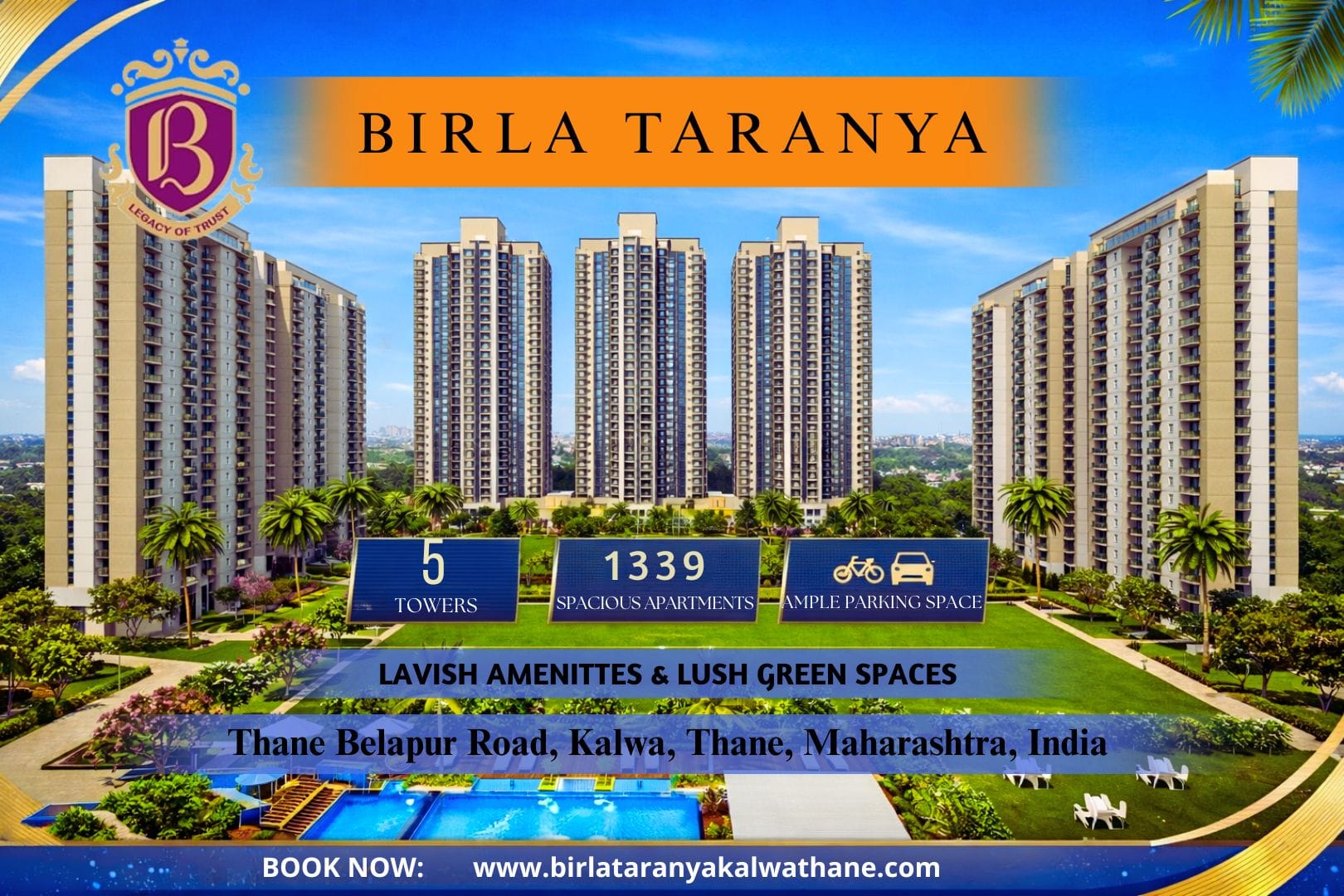
A growing number of home seekers choose Kalwa because daily travel and social facilities sit in a balanced zone. This area also offers great potential for future growth. The Phase 1 of Birla Taranya Kalwa enters this picture as a large planned residential cluster. The builder designed this project for long-term living rather than short-term trading. The planning decisions translate into everyday comfort for all residents. This factor is very important because the project is still under development and open for booking.
The project follows the name Birla Estates Kalwa Thane and comes from Birla Estates. The large scale of the land signals a township style environment. Construction is progressing in different phases at the site. Regulatory approvals define the tower heights and parking structures clearly. These approvals also cover the common areas for relaxation and play. Early buyers evaluate the planning logic instead of looking at finished interiors.
Location Value in Real-Life Daily Use
Kalwa connects residential calm with city accessibility, and this helps because weekday routines rarely allow long commutes. A resident heading toward Thane or Navi Mumbai experiences smoother travel options compared to outer suburban zones. Traffic patterns fluctuate during peak hours, similarly road access near Thane Belapur Road supports flexible travel planning.
A practical weekday scenario explains the benefit:
- Morning office travel stays manageable due to arterial road access
- School routes remain short for children
- Grocery and healthcare errands fit easily into evening schedules
- Weekend outings connect quickly to Thane lifestyle zones
One noticeable benefit appears in work-from-home routines. A quieter neighborhood atmosphere supports focused hours, in contrast to dense commercial belts where noise interrupts productivity.
Birla Taranya - Phase 1 : Scale, Towers, and Community Planning
Phase 1 of Birla Taranya Kalwa introduces five high-rise wings with more than a thousand apartments. High-density planning sometimes raises concerns, however structured tower spacing and vertical circulation aim to reduce congestion. The layout distributes homes across multiple wings, and that means crowd pressure spreads rather than concentrates.
From a buyer point of view, tower planning influences daily movement:
- Lift cores serve defined floor counts
- Podium and basement parking separate vehicles from pedestrian zones
- Entry and exit planning reduces bottlenecks
- Recreational open space remains preserved within the layout
One practical advantage lies in how vertical communities function over time. Shared infrastructure becomes economically efficient, as a result maintenance standards typically stabilize.
Parking and Movement Logic
Urban projects often overlook vehicle circulation, yet parking design here plays a central role. Allocation roughly aligns with apartment volume, and this helps because vehicle ownership continues to rise in family households.
In daily usage, parking design affects comfort:
- Basement parking protects vehicles from weather exposure
- Podium circulation reduces surface clutter
- Visitor slots prevent spillover congestion
- Two-wheeler capacity supports delivery and service access
Even though parking seems like a background feature, a thoughtfully planned system improves morning departures and evening returns significantly.
Apartment Planning and Practical Living
Apartment layouts influence long-term satisfaction more than brochure visuals. Floor planning emphasizes functional room proportions, similarly balcony placements support ventilation and daylight. What really matters is how homes behave during regular routines.
Real-life usability appears in several ways:
- Living areas accommodate family gatherings without tight corners
- Kitchens connect efficiently to service zones
- Balconies allow evening relaxation or indoor gardening
- Storage niches support organized living
A micro-scenario clarifies this: children completing homework in the living area benefit from natural light, meanwhile adults preparing meals stay visually connected. That means family interaction continues without spatial conflict.
Ventilation planning becomes especially relevant in warm seasons. Cross airflow reduces artificial cooling demand, consequently energy usage remains controlled.
Recreational Space and Lifestyle Rhythm
Recreational open areas occupy a meaningful portion of the layout, and this supports daily stress relief. Many buyers prefer communities where children play safely inside gated boundaries, in fact such environments reduce dependence on external parks.
Weekend living finds a comfortable rhythm:
- Morning walks within landscaped zones
- Casual conversations among neighbors
- Children cycling under supervision
- Quiet seating areas for reading or remote work
A noticeable benefit appears in long-term social bonding. Shared open spaces encourage organic interaction, similarly families build familiarity over time.
Development Status and Buyer Perspective
Construction remains in an active development stage, and booking opportunities continue under regulatory oversight. Early-phase buying carries planning clarity, meanwhile possession timelines remain structured by approval frameworks.
From a practical standpoint:
- Structural progress defines execution pace
- Regulatory documentation outlines tower specifications
- Phased development allows infrastructure staging
Many buyers consider early entry advantageous, even though patience becomes part of the journey. Transparent planning often signals long-term delivery discipline.
Problem–Solution View for Urban Buyers
Urban home seekers frequently face three recurring concerns: commute stress, crowded infrastructure, and poor layout usability. Birla Taranya Phase 1 addresses these areas through location balance, structured density, and functional apartment planning.
In simple terms:
- Commute pressure reduces through arterial connectivity
- Community scale distributes population effectively
- Layout logic supports everyday routines
At the same time, buyers evaluate construction timelines carefully, because informed expectations prevent future frustration.
Final Practical Takeaway
Residential property buyers rarely depend on visual appeal alone. Planning intelligence, movement flow, and community structure influence satisfaction more than surface features. Birla Taranya Kalwa Phase 1 functions as a structured habitat where scale meets comfort.
Long term residents benefit from organized paths and balanced tower density. The project integrates open space in a meaningful way. Daily life unfolds smoothly whether you commute to work or manage family routines. You can also enjoy your weekend downtime without any stress.
Traffic growth and lifestyle needs continue to shape the area of Kalwa. Early planning projects attract attention from practical buyers because of this demand. Specific details about Birla Estates Kalwa Thane reveal how the design aligns with real world living. The project focuses on actual expectations rather than just a marketing spectacle.